I've spent more than 30 years in LGBTQ+ digital media and marketing, and a significant portion of that time working with travel clients — destinations, tour operators, cruise lines, hotel groups, visitor bureaus. I've watched the LGBTQ travel market grow from a niche consideration into one of the most coveted, highest-spending segments in global tourism. And I want to tell you something clearly, given everything happening in the current political and corporate environment: the 2026 LGBTQ travel opportunity is real, it's substantial, and right now it's less competitive than it has been in years.
Here's why that matters. When major corporations pull back from visible LGBTQ+ support — which is what's been happening since the 2023 double-boycott cycle and accelerated through the 2025 federal DEI rollbacks — the field opens up. The LGBTQ+ community is still traveling. The spending is still happening. The loyalty is still there for brands that show up authentically. What's changed is that some of the loudest corporate voices have gone quiet, which means the travel brands that step into that space now are going to be heard more clearly, by a community that is actively noticing who stayed.
The Market Picture: What's Actually Happening in 2026
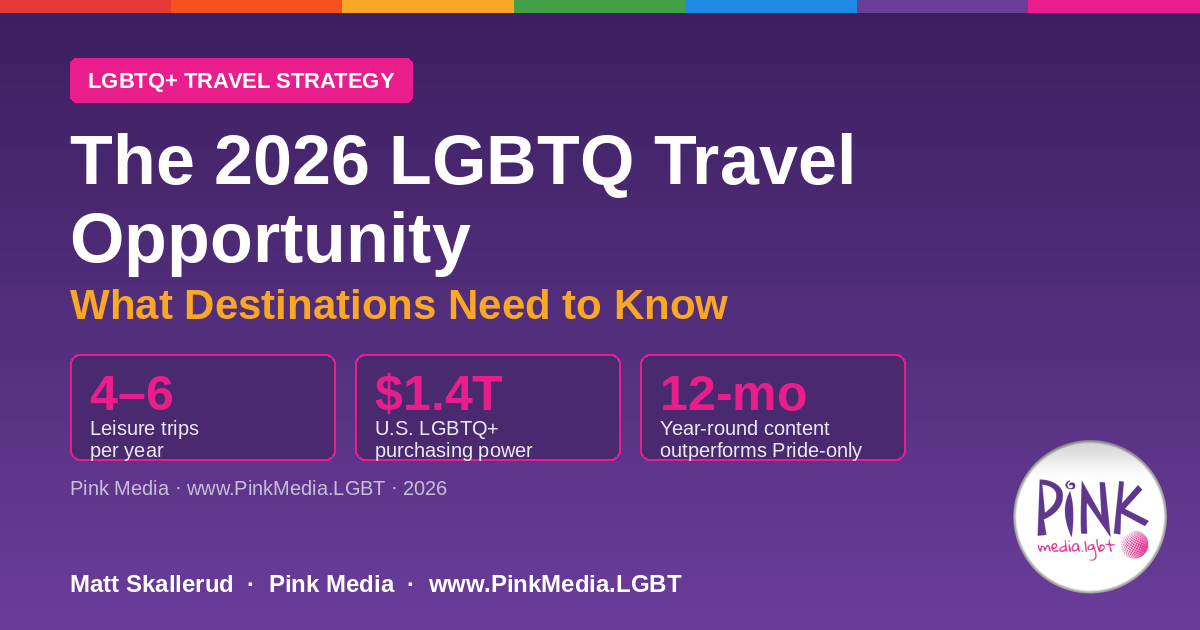
Let me lay out the market conditions honestly, because I think the nuance matters for destinations trying to plan strategically. Overall LGBTQ+ travel demand remains strong. This community takes more leisure trips annually than the general population average — four to six trips per year is a widely cited benchmark — and their spending remains resilient even in economic uncertainty. They are over-indexed on experiential travel, international travel, and premium hospitality. That has not changed.
What has changed is the Pride-specific travel piece. With major corporate sponsors pulling back from big Pride events — leaving budget shortfalls in cities including Pittsburgh, Salt Lake City, Orlando, and others — the scale of some flagship Pride events is contracting. Fewer activations, less programming, sometimes higher attendee costs. That does create a softening in Pride-event-specific travel for some destinations.
But here's the part that gets under-covered: non-Pride LGBTQ+ travel is growing. Year-round LGBTQ+ travel — the kind built around community, safety, identity-affirming experiences, and destination loyalty — is accelerating precisely because the community has always known that the best travel experiences aren't limited to one weekend in June. Destinations smart enough to build year-round relationships with LGBTQ+ travelers are the ones pulling ahead.
"The winning strategy in 2026 isn't Pride-centric marketing. It's 12-month visibility, safety-forward messaging, and community partnerships that feel real because they are real."
Safety Is Now a Primary Travel Decision Factor
This one has moved up the list faster than almost anything else I've watched in the LGBTQ+ travel market. GLAAD's 2026 Safety Index shows widening gaps between destinations perceived as safe and welcoming for LGBTQ+ travelers versus those that are not — and that perception gap is translating directly into booking decisions.
LGBTQ+ travelers — and particularly transgender and nonbinary travelers, and LGBTQ+ families traveling with children — are increasingly doing their homework before they book. They're looking for destinations with clear anti-discrimination protections, visible LGBTQ+ community partnerships, transparent safety communication, and evidence of genuine local engagement. The destinations that communicate this well are outperforming those that stay silent, even when the underlying hospitality offering is comparable.
What this means practically: having a dedicated LGBTQ+ traveler safety page, a "know before you go" resource, visible LGBTQ+ staff or destination ambassadors, and documented local LGBTQ+ community partnerships is not just good community relations — it is a direct competitive advantage in where this segment chooses to spend its money.
The Opportunity Areas: Where to Focus in 2026
1. Year-Round LGBTQ+ Storytelling
Pride is no longer the anchor it once was for LGBTQ+ travel marketing — and honestly, for sophisticated destinations, that's a good thing. The traveler relationship you build through a consistent 12-month content strategy is far more durable than the one you build through a June sponsorship. This means LGBTQ+-hosted travel content, creator-led destination storytelling, seasonal LGBTQ+ travel guides (winter escapes, fall festivals, wellness retreats), and spotlights on queer-owned local businesses. Content as Advertising — starting with authentic stories and amplifying them across targeted LGBTQ+ channels — is the model that builds lasting destination loyalty.
2. Creator Licensing and Authentic Storytelling
With corporate Pride budgets shrinking, LGBTQ+ content creators are increasingly open to content licensing arrangements with tourism boards and travel brands. This is a model worth understanding: rather than commissioning traditional production, a destination licenses existing or newly created authentic travel narratives from LGBTQ+ creators — content that their audiences already trust — and uses it across paid and organic channels. It's more cost-effective than traditional production, more credible with LGBTQ+ travelers, and reusable across multiple campaign cycles. At Pink Media, we've been working in this content licensing space for years, and the market for it is growing as corporate ad budgets get squeezed.
3. Niche LGBTQ+ Travel Segments Are Outperforming
Not all LGBTQ+ travel is moving at the same pace. Several niche segments are genuinely outperforming the broader market right now, and they deserve specific attention:
- River Cruises & Small-Ship LGBTQ+ Charters — High repeat rates, high spend, and strong community loyalty. Operators like Transcend, BearCruise, and VACAYA have built genuinely devoted followings. The small-ship model resonates with LGBTQ+ travelers who want intimacy, community, and a sense that the experience was designed with them in mind.
- Transgender and Nonbinary Travel — This segment is underserved and has genuine high need for safety-first destination messaging. Destinations that invest in staff training, visible trans-inclusive communication, and documented local support resources are building loyalty in a community that has not been adequately served by mainstream travel marketing.
- LGBTQ+ Family Travel — Growing rapidly as more LGBTQ+ parents travel with children and look for destinations with genuinely inclusive family programming. Resorts and cities that make this explicit — not just rainbow-flagged, but actually family-tested and family-inclusive in their experience design — win repeat bookings and word-of-mouth that's hard to buy with any advertising budget.
- Wellness and Retreat Travel — Particularly strong among younger LGBTQ+ travelers who are seeking mental health support, community connection, and restorative experiences. This aligns with broad trends in experiential and wellness travel, and LGBTQ+-specific wellness retreats and programming are a growing differentiator for resorts and destinations.
4. Reinventing Pride Sponsorship as Community Investment
With the big corporate logos stepping back from Pride event sponsorships in many cities, there is genuinely less competition for the brands willing to step in — but the community has also gotten more sophisticated about what "showing up" means. The sponsorships that resonate in 2026 are not rainbow-logo activations. They are community stages funded for queer artists. LGBTQ+ youth travel scholarships. Support for local LGBTQ+ organizations that anchor the community year-round. Pride travel bundles that bring real economic benefit to local LGBTQ+-owned businesses. The repositioning of Pride sponsorship as community investment, rather than brand visibility, is what lands — and it builds the kind of authentic relationship with LGBTQ+ consumers that outlasts any single June.
"The LGBTQ+ traveler relationship you build through consistent year-round community presence is worth more than ten years of rainbow-logo activations. Community trust is earned slowly and remembered for a very long time."
The Opportunity Matrix: Where to Start
I don't know about you, but when I'm advising clients on where to put their energy, I find it helpful to think about opportunity areas in terms of difficulty of execution versus return on investment. Here's my honest read on the five key areas for 2026:
| Opportunity | Difficulty | ROI Potential | Why It Matters |
|---|---|---|---|
| Creator licensing & content storytelling | Low | High | Authentic, scalable, cost-effective — and the pipeline is open right now |
| LGBTQ+ safety programs & messaging | Medium | High | Now the #1 travel decision factor for many LGBTQ+ travelers |
| Niche segments: cruises, family, wellness, trans-inclusive | Medium | Very High | High spend, low competition, strong repeat booking rates |
| Year-round LGBTQ+ content engine | Medium | High | Builds long-term destination loyalty across a 12-month traveler relationship |
| Pride sponsorship reinvention | Low | Medium | Low competition in 2026 creates genuine visibility opportunity |
What to Actually Do: Five Strategic Recommendations
I've been in enough travel industry conversations to know that "strategy" without implementation guidance is just interesting reading material. So here's what I'd actually recommend for destinations and travel brands looking at this market in 2026:
Build a 12-month LGBTQ+ content engine. Short-form video, creator licensing, LGBTQ+ business spotlights, seasonal destination storytelling — the goal is to be visible and present in LGBTQ+ media year-round, not just in June. This is the most sustainable competitive advantage a destination can build in this market.
Partner with local LGBTQ+ organizations — not just Pride committees. LGBTQ+ chambers of commerce, community centers, queer-owned businesses, drag collectives, and trans advocacy groups. These partnerships build genuine credibility with the community in ways that a sponsorship check to the main Pride stage simply cannot.
Develop and publish safety-first messaging. A dedicated LGBTQ+ traveler safety guide. Local LGBTQ+ community contacts. Hotel staff training programs. A "safe stay" certification or visible indicator that LGBTQ+ guests can expect. This is table stakes for the segment, and it's still surprisingly rare.
Invest specifically in niche LGBTQ+ travel segments. Especially river cruises and small-ship charters, LGBTQ+ family travel programming, wellness retreat offerings, and trans-inclusive service design. These are the areas with the highest returns and, right now, the lowest competitive density.
Target your LGBTQ+ marketing investment year-round. The LGBTQ+ travel market is a 24/7, 365-days-a-year opportunity. Destinations that show up only in June are leaving most of the relationship on the table. Broader yet more targeted digital reach — across LGBTQ+ media, community publications, and social channels where LGBTQ+ travelers actually live online — is the distribution model that works.
The Bottom Line for Destinations and Travel Brands
Here's the honest summary: in a year when some of the big corporate voices in LGBTQ+ marketing have gone quiet, the LGBTQ+ travel market has not gone anywhere. The travelers are still there, still spending, still looking for the destinations and brands that will earn their loyalty through genuine community engagement rather than seasonal rainbow logos. The opportunity in 2026 is to be that brand.
At Pink Media, we've been helping destinations and travel brands reach the LGBTQ+ community authentically for years — through targeted digital content, community media partnerships, creator licensing, and broad yet precisely targeted reach across LGBTQ+ channels. If your destination or travel brand is looking at this market and wondering where to start, we'd genuinely love to help you put a strategy together. The door is open — and right now, fewer people are walking through it than should be.